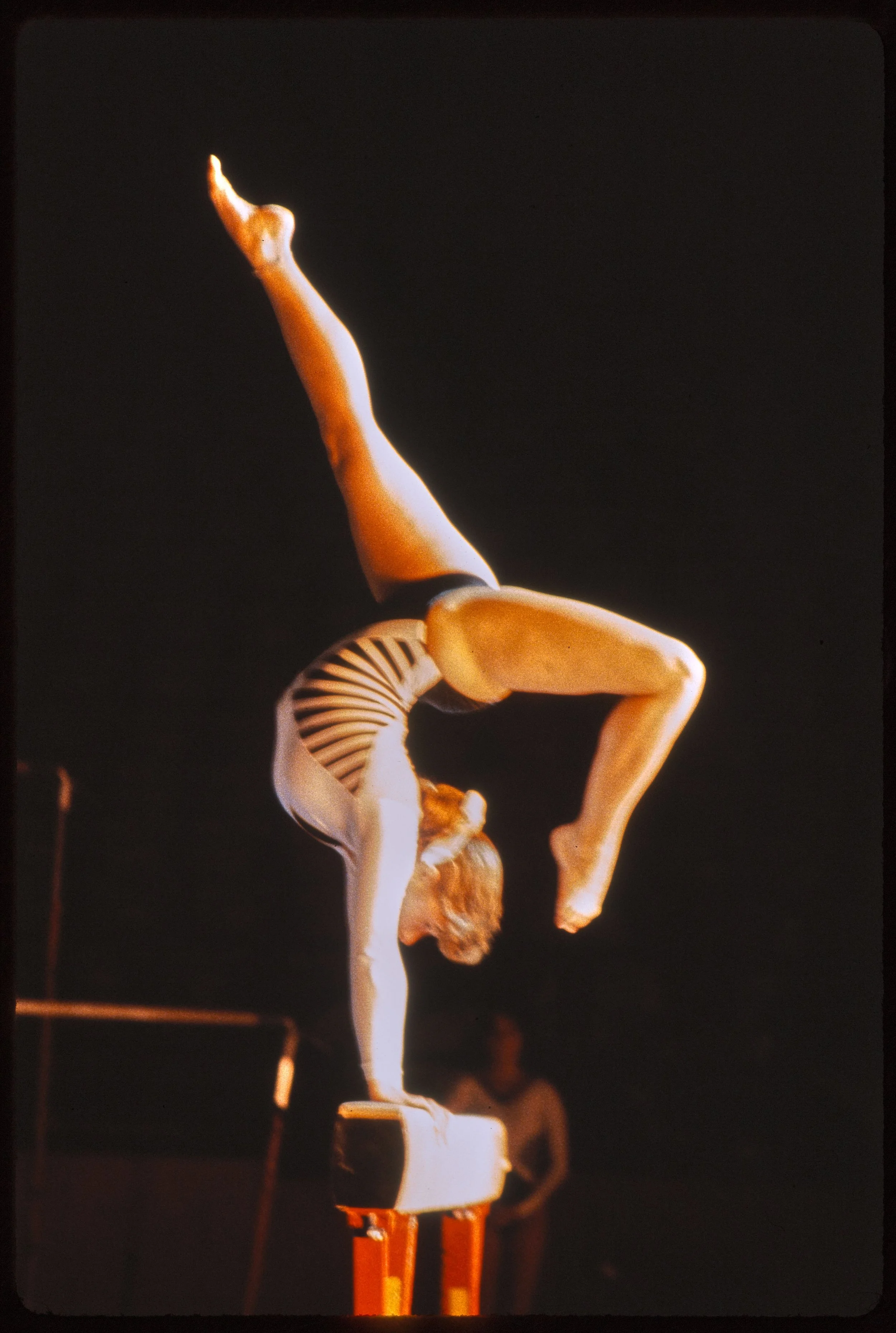
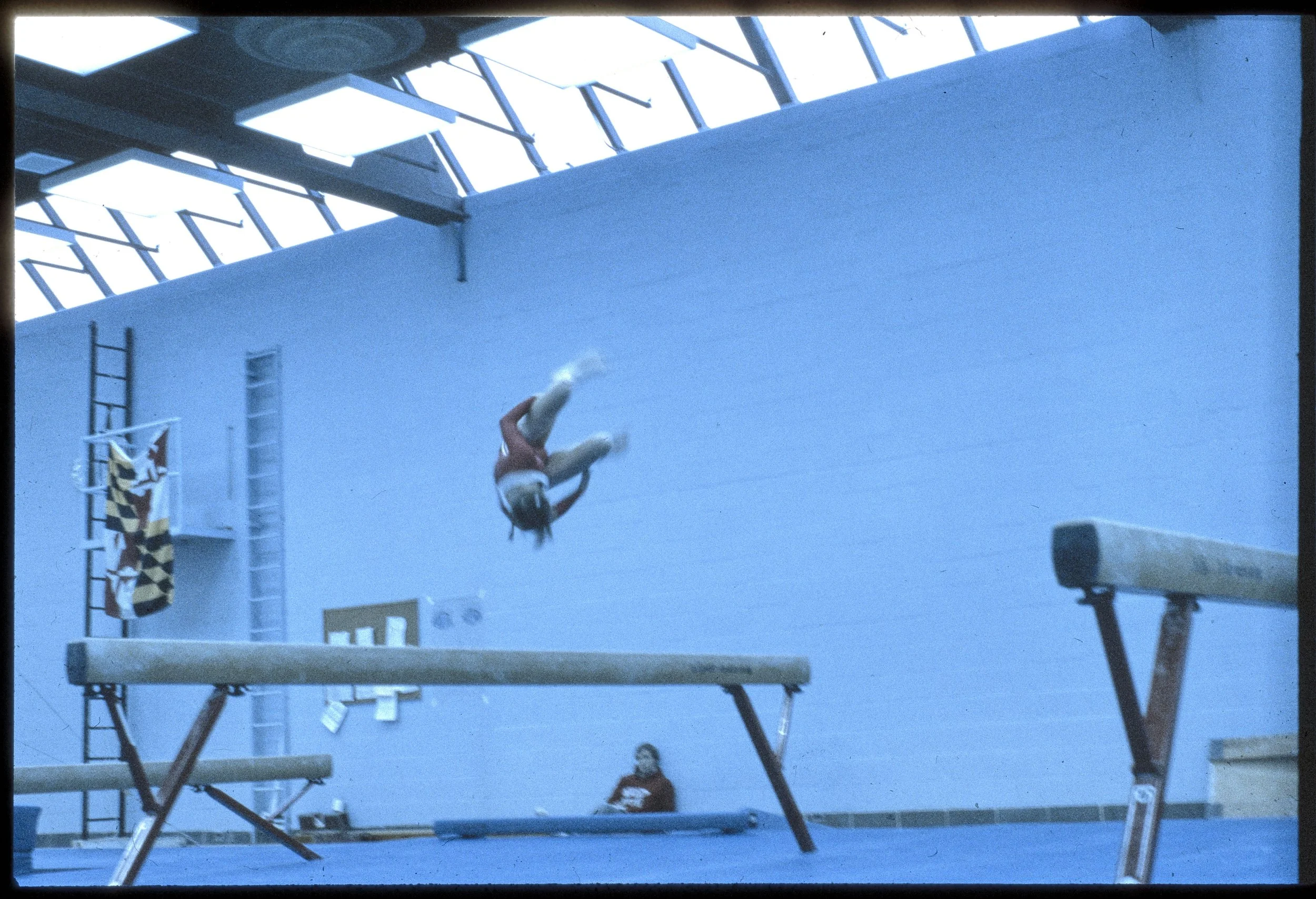
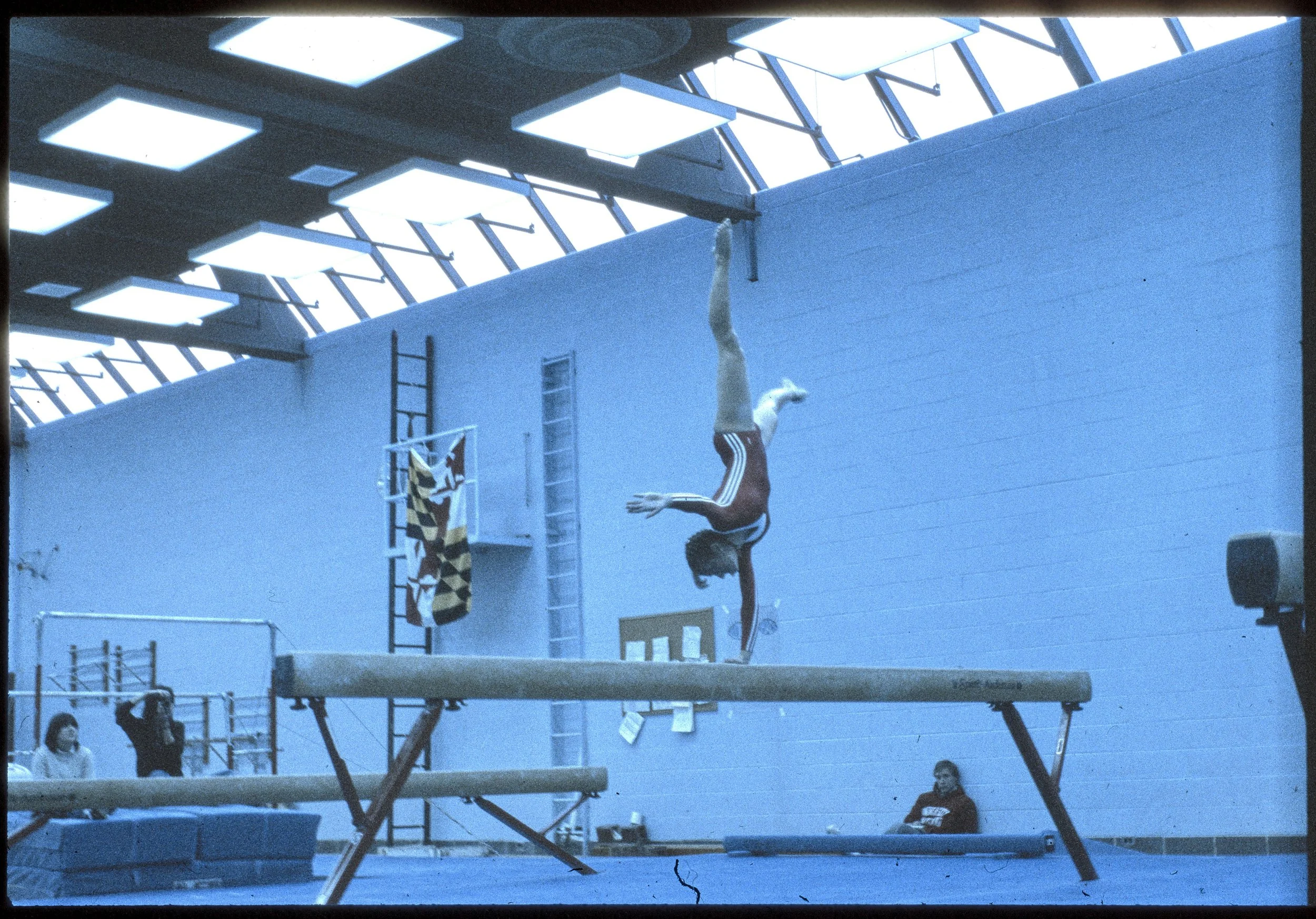
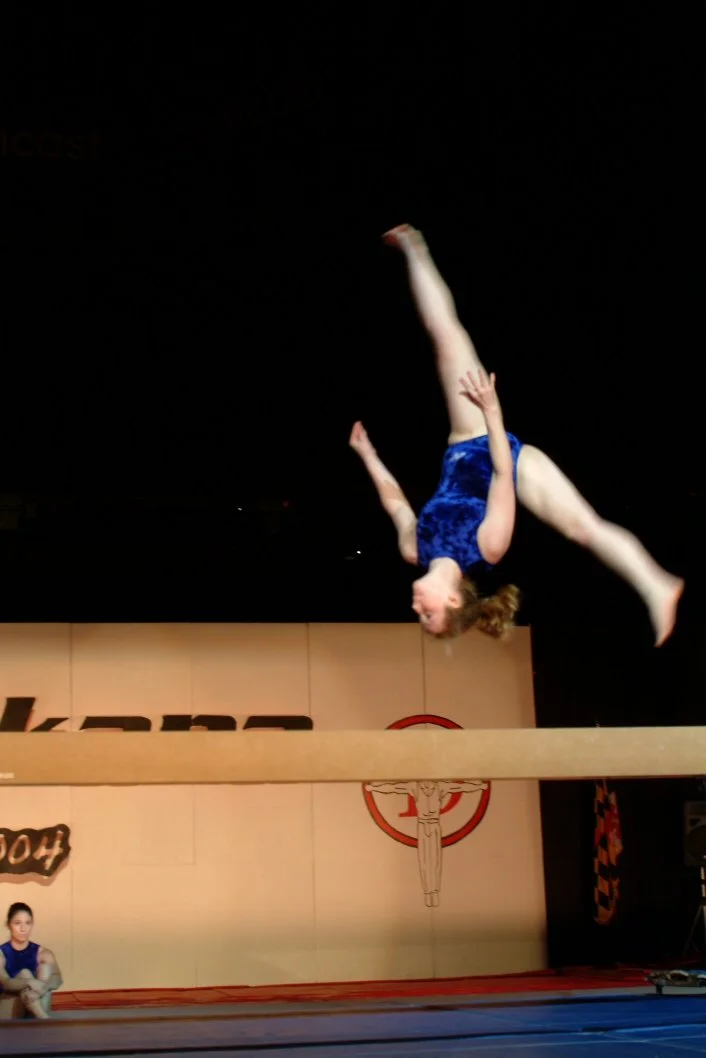
Female trouper straddle handstand on beam at road show
Balance Beam
Best act: 2009
Click here to view a video about balance beam from gymkana’s 80th home show
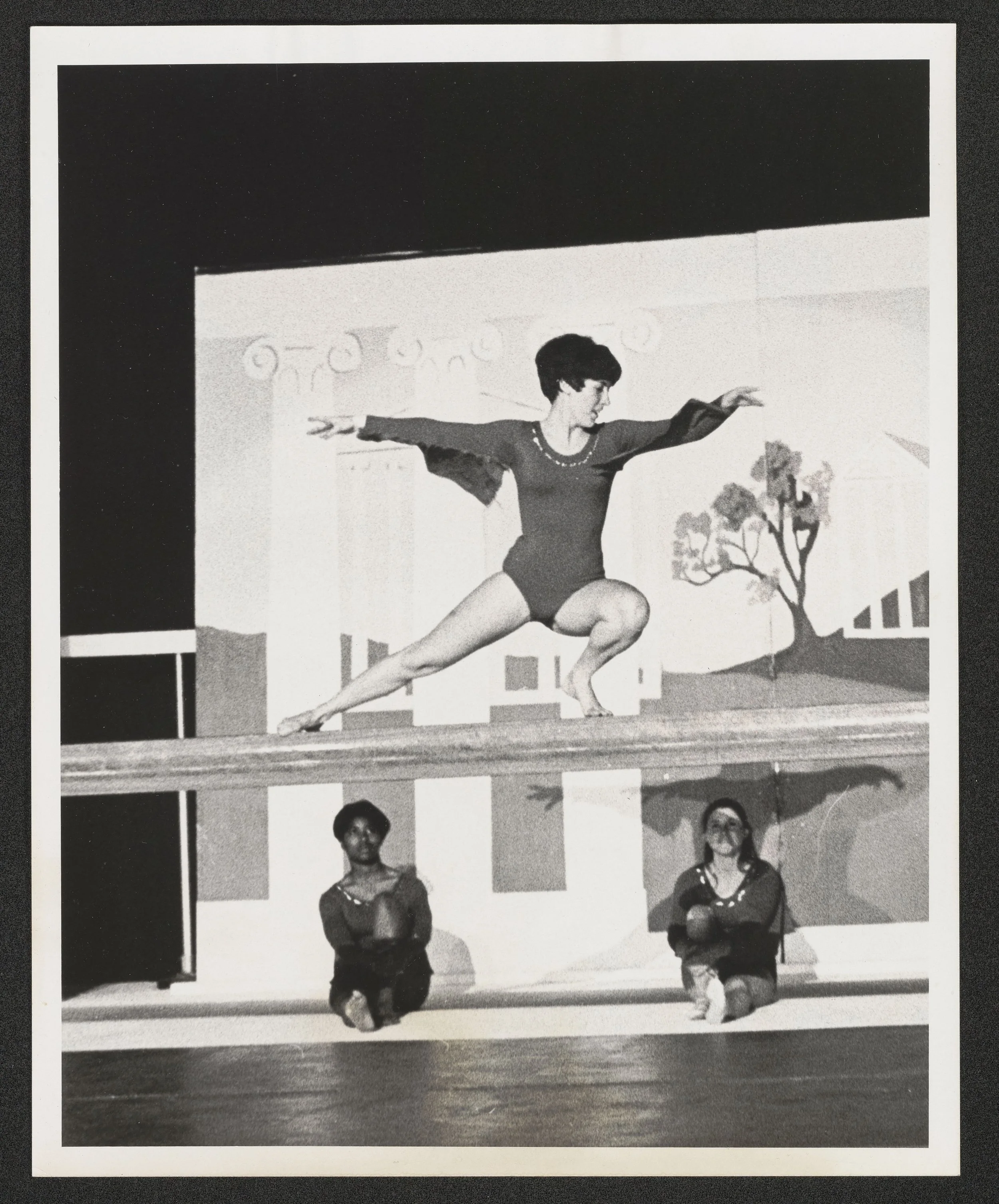
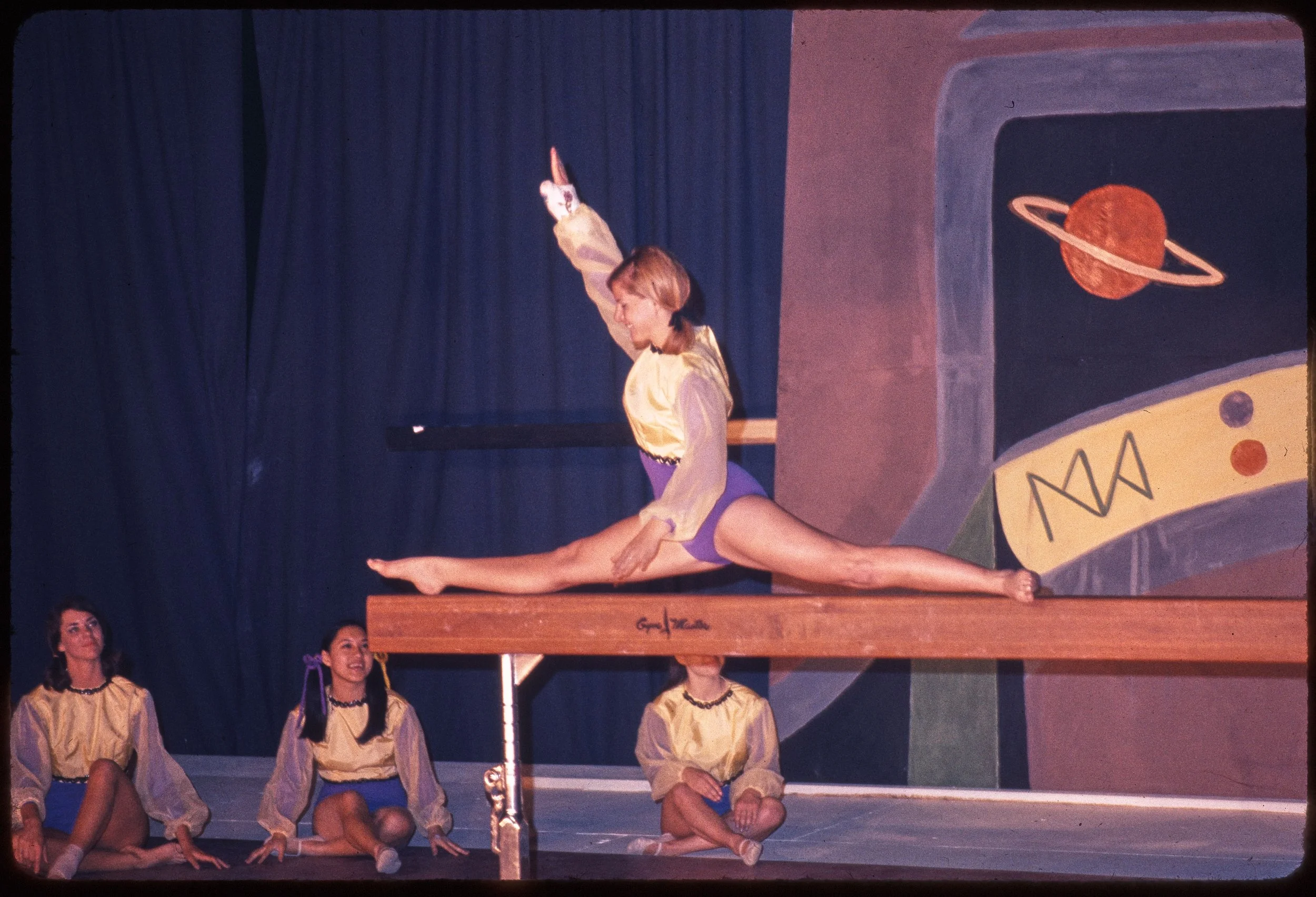
The balance beam first joined Gymkana’s continuity in the 1952-53 season and was first performed as a solo act by Bernie McKeldin. First popularized in the 1934 world championships (the first championship women were allowed to compete in), the balance beam is an awe-inspiring apparatus that sets audiences’ hearts racing with second-hand thrill. The beam demands immense concentration, coordination, and incredibly precise movements. As the apparatus was originally meant to be a showcase of dance and grace, the first cartwheel on beam was not competed until 1956, and the first back handspring was in the mid 1960s. Since then, the beam has evolved throughout its lifetime in artistic gymnastics to emphasize power and acrobatics. In the 1970s, the difficulty of balance beam skills increased immensely, with aerial and tumbling skills becoming more and more common. The beam itself also got a makeover, becoming the 4-inch, leather-covered apparatus we know today. Now, beam routines consist of a combination of graceful dance, jumps, leaps, turns, and acrobatic skills.
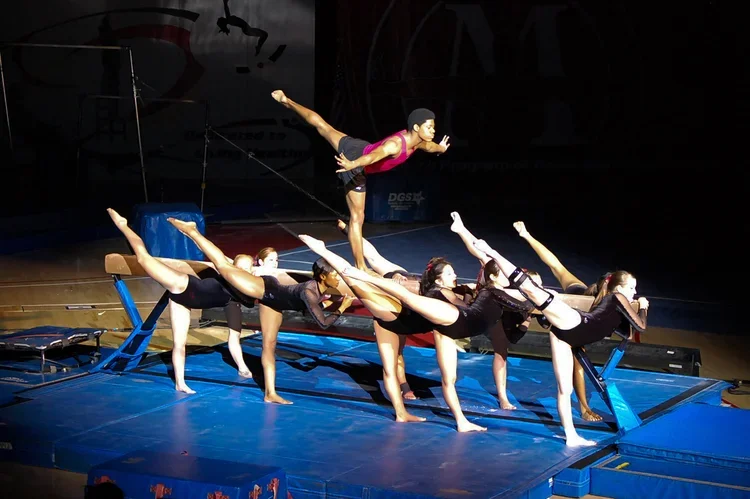
One of the aspects of Gymkana’s beam act that make it unique today is its collaborative quality. Troupers showcase group passes and poses, weaving around each other on the thin beam and using each other for partner and group skills. They also have the opportunity to present individual routines and skills. The first man to perform in the beam act was Jarel Dorsey in 2008. Since then, many others have joined him, providing the act with even more creativity and unique strengths.